










India's SpaceTech Startups Have Raised $871 Million. What Comes Next?
India's SpaceTech startups have raised $871 million across 241 funding rounds. With private rockets, satellites and space-data companies growing, what comes next for India's commercial space industry?

India is no longer looking at space only as a government programme.
Private companies are now building rockets, satellites, propulsion systems and space-data businesses — and investors are putting serious money behind them.
India's SpaceTech startups have raised about $871 million across 241 funding rounds involving 285 companies as of July 2026.
From $43 Million to $871 Million
The growth has been rapid.
In 2021, India's SpaceTech startups raised just around $43 million across 12 funding rounds. By 2025, annual funding had reached about $200 million.
The sector now covers businesses working across launch vehicles, satellite manufacturing, propulsion, Earth observation and space analytics.
But the money is not spread evenly. More than 60% of the total funding has gone to the 10 most-funded companies.
Skyroot Is Leading the New Wave
Hyderabad-based Skyroot Aerospace is currently the best-funded SpaceTech startup in India, with about $150 million raised.
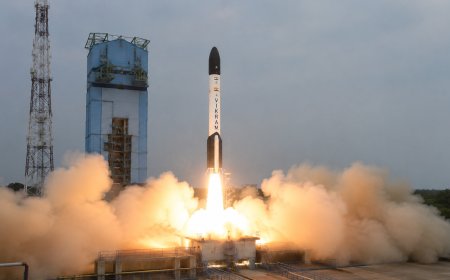
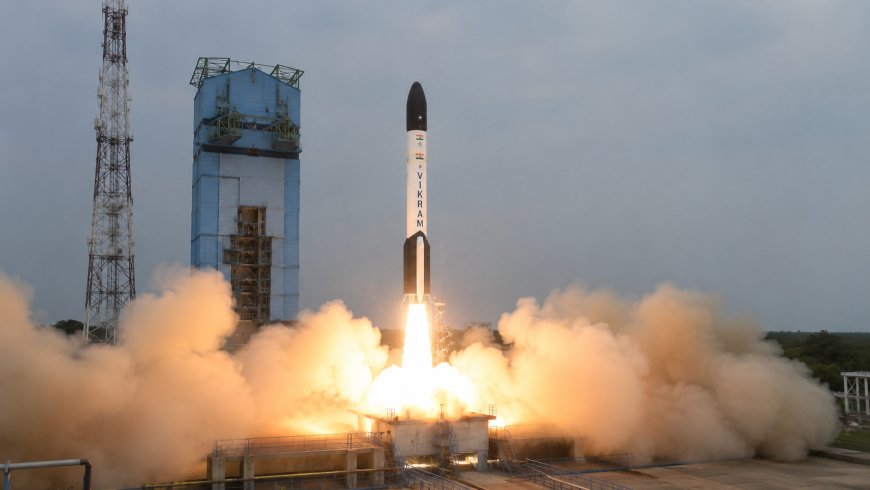
The company also made history on July 18, when its Vikram-I rocket became the first privately developed Indian rocket to successfully reach orbit from Indian soil.
The mission carried multiple payloads into low Earth orbit and marked a major step for India's private space industry.
For Skyroot, the next challenge is no longer proving that a private Indian company can reach orbit.
It is proving that it can do it repeatedly and build a commercial launch business around it.
It Is Bigger Than Rockets
India's SpaceTech opportunity is not limited to launch vehicles.
Companies are also working on satellites, propulsion, Earth observation, space situational awareness and space-based data.
Startups such as Pixxel, Agnikul Cosmos and Digantara are among the other companies attracting significant funding.
That means the industry could eventually create businesses across the entire space value chain.
Why Is This Happening Now?
India's space sector opened up to greater private participation after the government introduced reforms in 2020.
Those changes created more room for private companies to build and operate space technologies.
The result is a new ecosystem where startups can work alongside India's established space infrastructure.
The Real Challenge Is Commercial Scale
Raising money and launching a rocket are major achievements.
But neither guarantees a successful business.
Space companies need customers, repeat missions, reliable technology and strong economics.
That is where India's SpaceTech industry enters its next phase.
The first question was:
Can private Indian companies build space technology?
They have started answering that.
The next question is:
Can they turn that technology into large, repeatable businesses?
BizGossips Take
India's $871 million SpaceTech funding story is not just about rockets.
It shows that a private space industry is slowly taking shape across launches, satellites, data and other technologies.
The next few years will decide whether this funding creates a few successful companies or a much larger Indian space ecosystem.
The money has arrived. Now the industry has to prove the business.
What's Your Reaction?
 Like
0
Like
0
 Dislike
0
Dislike
0
 Love
0
Love
0
 Funny
0
Funny
0
 Angry
0
Angry
0
 Sad
0
Sad
0
 Wow
0
Wow
0