











































































America’s $37 Trillion Warning: Debt Interest Emerges as the Next Economic Shock
The U.S. national debt has crossed $37 trillion, with interest payments nearing $1 trillion annually—posing a major threat to core government spending.

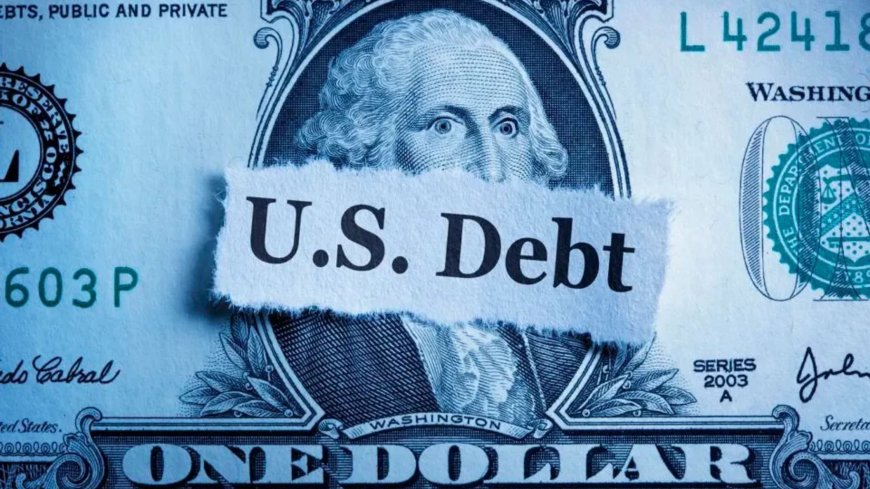
🇺🇸 U.S. Debt Crosses $37 Trillion: Is the Interest Bill America's Greatest Economic Threat?
The U.S. national debt has officially surpassed $37 trillion — a staggering figure that now eclipses the nation’s annual economic output. While large deficits have long been part of fiscal policy, what’s emerging as the most immediate and alarming threat is the soaring cost of interest payments, now nearing $1 trillion annually.
At current levels, nearly 25% of all federal tax revenue is being used just to service debt — leaving significantly less room for essential programs like Social Security, Medicare, defense, infrastructure, and education. According to the Congressional Budget Office (CBO), if left unchecked, U.S. debt could skyrocket to 156% of GDP by 2055, putting the entire fiscal structure under stress.
The issue is not just budgetary — it’s structural. High debt levels risk crowding out private investment, raising borrowing costs for families and businesses, and slowing wage growth. The CBO estimates the U.S. GDP could shrink by $340 billion in the next decade due to unchecked borrowing, potentially resulting in the loss of 1.2 million jobs.
With global investors growing more cautious and demanding higher returns, interest rate hikes only worsen the situation. Every uptick in borrowing costs puts additional pressure on the federal budget, triggering a potential fiscal domino effect that could shake investor confidence and cause ripple effects across global markets.
Despite moderate economic growth projections of 1.4–1.6% and persistent inflationary pressures, the U.S. now stands at a critical juncture. Without meaningful reforms in taxation, spending, and debt management, the financial future may be defined more by crisis management than prosperity.
Economists, business leaders, and policymakers agree: the time to act is now. Delaying fiscal responsibility may push the burden onto future generations — or bring consequences much sooner.
What's Your Reaction?
 Like
0
Like
0
 Dislike
0
Dislike
0
 Love
0
Love
0
 Funny
0
Funny
0
 Angry
0
Angry
0
 Sad
0
Sad
0
 Wow
0
Wow
0